Winter can be brutal on your vehicle. Cold temperatures, icy roads, and salt can take a serious toll on everything from your battery to your tires. Preparing your car for winter isn’t just about comfort — it’s about safety.
Start by checking your battery. Cold weather reduces battery capacity significantly. If your battery is more than three years old, have it tested before winter arrives. A dead battery on a freezing morning is the last thing you need.
Your tires are your first line of defense on icy roads. Check the tread depth using the penny test — if you can see the top of Lincoln’s head, it’s time for new tires. Consider switching to winter tires for improved traction.
Antifreeze is critical in winter. Make sure your coolant is a proper 50/50 mix of antifreeze and water. This prevents your engine block from freezing and cracking in extreme cold.
Check your wiper blades and washer fluid. Winter driving means more road spray and grime. Install winter-grade wiper blades and fill your washer reservoir with freeze-resistant fluid.
Keep your gas tank at least half full during winter. This prevents fuel line freeze-up and ensures you have enough gas in case you get stuck. It also adds weight over your rear axle for better traction.
Test your heater and defroster before you need them. A working heating system is essential for comfort and safety — you need clear windows to drive safely.
Check all your lights. Winter means shorter days and reduced visibility. Make sure all headlights, taillights, brake lights, and turn signals are functioning properly.
Consider an emergency kit for your trunk: blanket, flashlight, ice scraper, jumper cables, sand or kitty litter for traction, and some non-perishable snacks.
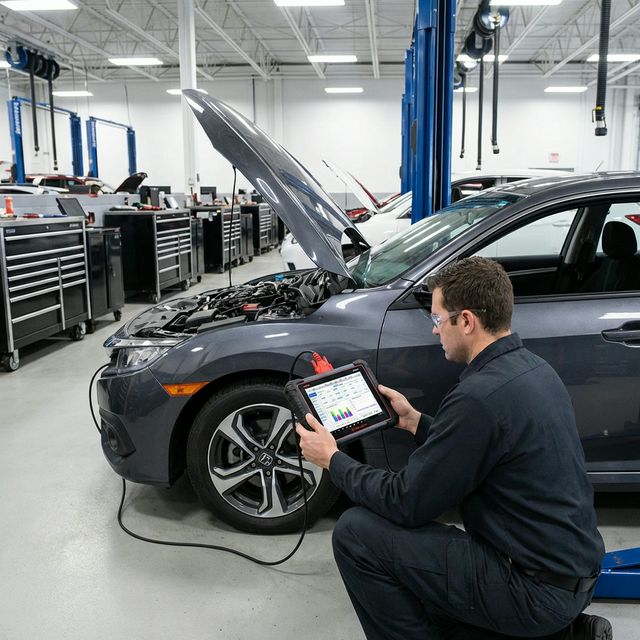
Finally, get a comprehensive inspection before winter hits. Our technicians can identify potential issues before they become expensive problems in the cold.